Syringe Performance and Drug Containment Risk: Why Plunger Performance Matters in Prefilled Syringes
As the use of pre‑filled syringes (PFS) and self‑administration devices continues to grow, syringe performance has become a critical factor in managing drug containment risk across the product lifecycle.
While elastomer components may be designed and manufactured to high quality standards, they must also perform reliably within the syringe system—from fill/finish and storage, through global distribution, to final administration by the patient.
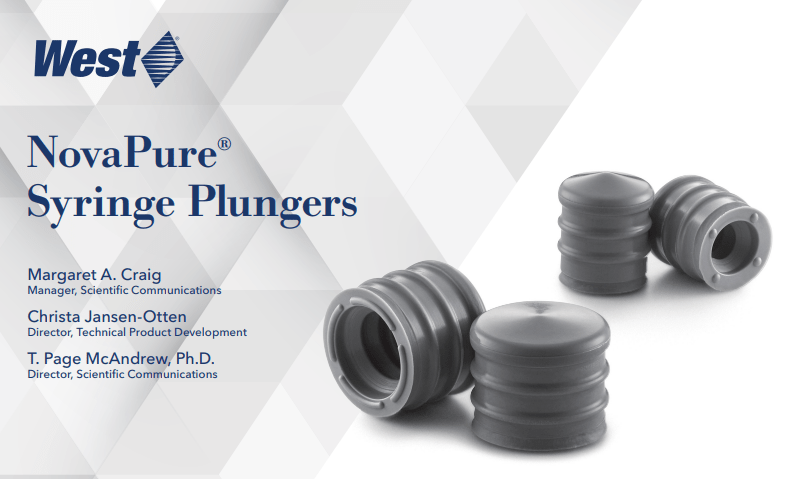
Inadequate syringe performance can compromise container closure integrity (CCI), dose accuracy, device functionality, and ultimately patient safety and regulatory compliance. This makes plunger performance a key consideration for pharmaceutical manufacturers developing injectable drug products.
Where syringe performance risk occurs in pre‑filled syringe systems
Pre‑filled syringes may be exposed to demanding conditions long before use, including:
- Long‑term storage across the product shelf life
- Temperature variation during distribution
- Reduced atmospheric pressure during air transport
- Mechanical stresses when integrated into autoinjector devices
Each of these conditions’ places pressure on syringe component interactions, particularly the plunger. Changes in performance over time can introduce risks such as loss of CCI, unintended plunger movement, or inconsistent delivery during administration.
To better understand these risks, West evaluated syringe system performance using 1 mL long and 1–3 mL NovaPure® plungers in ISO glass pre‑filled syringes.
Maintaining container closure integrity over shelf life
CCI is essential to maintaining sterility and drug product stability throughout the shelf life of a pre‑filled syringe.
In accordance with USP <1207> Sterile Product Packaging – Integrity Evaluation, syringe systems must remain below the maximum allowable leakage limit (MALL) through expiry to protect product quality.
West assessed CCI using multiple deterministic and probabilistic methods, including:
- Tracer gas leak detection
- Dye ingress testing
- Dynamic leak testing
Across all methods, syringe systems incorporating NovaPure plungers maintained CCI with no failures observed for up to two years.
Why this matters: Proven CCI performance over time helps mitigate sterility risk and supports regulatory expectations under frameworks such as EU GMP Annex 1.
Managing plunger movement during air transport
Air freight exposes pre‑filled syringes to reduced atmospheric pressure, which can create internal pressure differentials and lead to unintended plunger movement.
Using laboratory simulations based on Boyle’s Law, West evaluated plunger movement under conditions representative of commercial aircraft environments. Results showed that:
- Measured plunger movement was lower than theoretical predictions
- Interference fit between plunger and syringe wall reduced movement
Why this matters: Reduced plunger movement during air transport supports dose accuracy and system integrity during global distribution.
Consistent delivery performance in autoinjector systems
For self‑administration, reliable syringe performance is critical. In the absence of a healthcare professional, deviations in injection time, delivered volume, or force can increase the risk of device failure or patient handling issues.
NovaPure plunger performance was evaluated in laboratory autoinjectors using placebo drug products of multiple viscosities and compared with standard plungers over one year. Testing demonstrated:
- Consistent delivery volume over time
- Improved delivery time performance
- Superior overall consistency relative to standard plungers
Why this matters: Predictable syringe performance helps reduce dosing variability and supports reliable function in self‑administration devices.
Lower initiation forces and reduced device stress
Initiation and sustaining forces are critical parameters for combination products. Elevated forces can increase mechanical stress on devices and negatively affect patient experience.
Testing showed that syringe systems using NovaPure plungers required lower energy to initiate plunger movement, while maintaining stable performance over time.
Why this matters: Lower initiation forces reduce risk to device mechanisms and supports smoother, more patient‑friendly injections.
Syringe performance as a drug containment risk control
Together, these performance evaluations demonstrate how syringe component behaviour directly influences:
- Drug containment and sterility assurance
- Device reliability
- Regulatory confidence
- Patient safety
Syringe performance should therefore be viewed not as a secondary consideration, but as a core risk management strategy for injectable drug products.
Learn more about syringe performance and drug containment risk. This blog highlights key findings from Chapter 3 of the NovaPure® Syringe Plungers eBook, which focuses on syringe performance as a driver of drug containment risk.
For full experimental methods and supporting data, explore the complete NovaPure® Syringe Plungers eBook, covering design, manufacture, syringe performance, and drug product compatibility. Download the free eBook here


 English
 Chinese